What Does a Personal Trainer Do in Southbank? (Honest Answer)
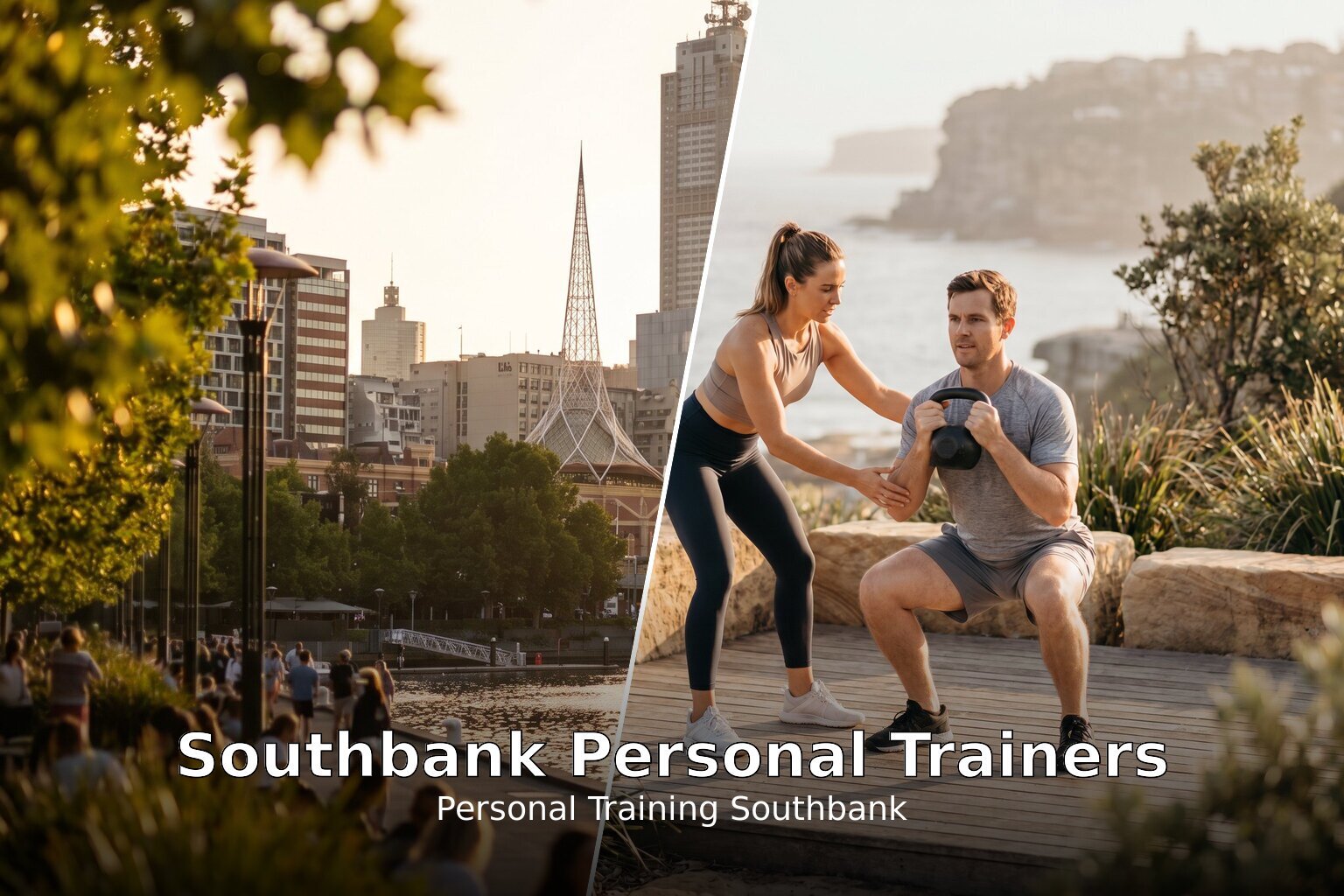
A personal trainer in Southbank writes your program, coaches your technique, tracks your progress, and keeps you accountable until results happen. That's the job. Everything else is details.
But the details matter, especially when you're spending real money and real time on something that needs to work.
What Exactly Does a Personal Trainer Do?
A PT does six things consistently well when they're good at their job.
- Assessment. They find out where you're starting from. Movement quality, strength base, injury history, lifestyle habits.
- Programming. They build a plan around your goal, not a generic template. Your schedule, your body, your starting point.
- Coaching technique. They watch every rep and fix what's wrong before it becomes an injury or a bad habit.
- Progression. They increase load, volume, or complexity at the right time so you keep improving instead of plateauing.
- Accountability. They show up. You show up. That relationship is more powerful than most people expect.
- Education. They explain why. When you understand the reason behind a squat cue or a nutrition shift, you apply it outside of sessions too.
In my experience, the accountability piece is what most people underestimate before they hire a trainer and overvalue most after they do. One of my clients tried three different gym programs on her own over two years. Same result each time. Three weeks in, life got busy, and training stopped.
Six weeks into working with a trainer, she hadn't missed a session. Nothing about her life got less busy. The appointment made it non-negotiable.
What Does a Session Actually Look Like in Southbank?
Sessions in Southbank usually run 45 to 60 minutes. The format depends on your goal, but a typical strength-focused session looks like this.
- A short warm-up targeting whatever movement patterns you're training that day.
- Two to four main compound lifts with coached technique and progressive loading.
- Accessory work targeting weaker areas or muscle balance.
- A brief cooldown or mobility finish.
If fat loss is the goal, the session structure shifts toward higher density work. More circuits, shorter rest, conditioning finishers. If rehab or pain management is the focus, sessions are slower, more technical, and built around restoring movement quality first.
Southbank is a useful location because you've got the river precinct, South Bank Parklands, and multiple commercial gyms within walking distance. Some trainers in Southbank out of private studios. Others use open-air spaces along the riverfront. Others are based in gyms near Grey Street or the Cultural Centre precinct.
The setting matters less than the quality of coaching, but training outdoors along the Brisbane River in the morning is genuinely motivating. I remember one client who said she'd never been a morning person until she started training at the parklands at 6am. The environment changed how she felt about getting up.
Is $400 a Month a Lot for a Personal Trainer?
It depends on what you're getting. Here's the direct answer: $400 a month in Southbank typically buys you two to four sessions per month, which is one session per week or less. That's a light frequency for most goals.
For most people chasing real results, two to three sessions per week is the effective range. At Southbank rates, that puts you somewhere between $600 and $1,200 per month depending on session length, trainer experience, and whether sessions are one-on-one or semi-private.
$400 a month isn't a lot if the alternative is a year of trial and error, wasted gym memberships, and no meaningful change. It is a lot if you treat it as an add-on to a life that doesn't have the structure to support consistent training.
What I found was that clients who got the most from a lower session frequency were the ones who used each session to learn, then trained independently two or three times per week applying what they learned. The PT session became the quality check, not the only training they did.
Some people also underestimate semi-private training. Two or three people training together with one coach, sharing the cost, can cut your per-session rate significantly while still getting real coaching. Not every trainer offers this, but it's worth asking.
What Most Articles Get Wrong About Personal Training
Three things come up again and again that most content on this topic either misses or gets backwards.
1. The program is not the most important thing
Most people assume hiring a trainer is about getting a better program. In reality, almost any reasonable progressive program will produce results if followed consistently. The reason most people don't get results isn't a bad program. It's inconsistency, poor technique, and no accountability.
A trainer solves all three. The program is secondary.
2. Motivation is an outcome, not a prerequisite
People often say they want to hire a trainer once they feel more motivated. That's backwards. Motivation follows action and progress. When I tried building training habits purely on motivation, it lasted as long as motivation lasts, which isn't very long.
The structure of a booked session creates the action. The action creates the result. The result creates the motivation. You don't wait for motivation to hire a trainer. You hire a trainer to build the structure that eventually produces motivation.
3. Nutrition does not have to be overhauled on day one
A lot of trainers push too hard on nutrition in the first few weeks. When someone gets a full training program and a complete dietary overhaul at once, compliance on both drops. The best trainers I've seen sequence it. Training first, one or two simple nutrition habits after a few weeks, then deeper work once the training habit is locked in.
How Much Do Personal Trainers Earn in Brisbane?
In Brisbane, a self-employed personal trainer charging $80 to $120 per session and carrying 20 to 30 clients per week can earn between $80,000 and $150,000 per year before expenses. Most trainers don't hit the top of that range because client retention, admin time, and building a client base take years to get right.
Trainers employed by a gym earn significantly less, typically $30 to $55 per hour for delivered sessions, plus base pay in some setups. The independent route pays more but carries the full overhead of running a small business.
Trainers in Southbank and inner Brisbane tend to charge at the higher end of Brisbane rates because of the location, the demographic, and the competition for quality trainers in a high-density area.
How Much Is a 1 Hour PT Session in Southbank?
A one-hour personal training session in Southbank runs $90 to $140 for an experienced trainer. New trainers or those building their client base sometimes price closer to $70 to $85. Highly experienced trainers with specialist credentials or strong results history can charge $150 or more.
Most trainers in the area offer 45-minute sessions at a slight discount, and many clients find 45 minutes is more than enough for a focused, high-quality session. The extra 15 minutes rarely changes the outcome.
Block bookings of 10 or 20 sessions usually come with a 5 to 15 percent discount. If you're serious about training for three months or more, asking for a block rate is worth it.
How Do You Know If a Trainer in Southbank Is Worth It?
Ask them these three questions before you commit.
- How do you measure progress? If they can't describe a clear method, their programming is probably guesswork.
- What does your onboarding look like? A good trainer does a proper assessment before writing a single session.
- Can I speak to a current client? Testimonials on a website are curated. A direct conversation isn't.
Red flags are easy to spot once you know what to look for. A trainer who talks more about their own physique than your goals. A trainer who can't explain the reason behind an exercise. A trainer who has no intake process and jumps straight into sessions without learning your history.
In Southbank, the trainer quality range is wide. There are excellent coaches operating out of small private studios near the cultural precinct, and there are gym-floor trainers who'll run you through a generic circuit and call it programming. The price difference between them is sometimes small. The results difference isn't.
FAQ
Do I need to already be fit to start with a personal trainer?
No. Most trainers prefer working with beginners because there are no bad habits to undo. The program starts where you are, not where someone else is.
Can a personal trainer help with weight loss specifically?
Yes, but training alone rarely produces major weight loss. A trainer can build the movement habit and educate you on the nutrition side, but combining both is what moves the needle.
Is outdoor training in South Bank Parklands as effective as gym training?
For most goals, yes. Bodyweight progressions, resistance bands, suspension trainers, and running or interval work cover a wide range of training needs. If your goal is heavy strength work or powerlifting, a gym is necessary. For general fitness, fat loss, or athletic conditioning, outdoor training is fully effective.
How long before I see results?
Most people notice improved energy and sleep within two to three weeks. Visible physical changes take six to twelve weeks of consistent training and reasonable nutrition. Significant body composition change takes four to six months minimum.
Do personal trainers in Southbank write nutrition plans?
Some do. A trainer with a nutrition coaching certification can provide meal guidance. Clinical nutrition advice for medical conditions requires a dietitian. Most trainers stay in the habit-based nutrition coaching lane, which is appropriate and useful for most people.
What to Do Now
If you're in Southbank and considering working with a trainer, book a trial session with two or three trainers before committing. Most offer a first session at a reduced rate or free. Use that session to assess how they coach, how they communicate, and whether they ask more questions than they answer.
The trainer who's most curious about your situation before they say anything about their programming is almost always the better choice.
Start there. One conversation, one trial session. That's the only decision you need to make right now.

What Is the Meaning of Personal Training in Southbank? A Real Guide
Read article →
Is 2 PT Sessions a Week Enough in Southbank? Here's the Honest Answer
Read article →
How Much Should I Budget for a Personal Trainer in Southbank?
Read article →Is a Personal Trainer Once a Week Worth It Southbank? Here's the Truth
Read article →
Is Seeing a Personal Trainer Once a Week Enough? (Southbank Guide)
Read article →